Why a Meeting Management Feature Is Essential for Modern HOA Operations

Board meetings are where decisions happen, trust is built, and communities move forward. For HOA boards and management teams, keeping those meetings organized and productive is not always easy. A strong meeting management feature helps bring structure, clarity, and consistency to a process that often feels overwhelming.

As communities grow and expectations rise, relying on emails, spreadsheets, or paper agendas can slow everything down. A meeting management feature gives HOAs a better way to plan, run, and document meetings without unnecessary friction.

Understanding the Meeting Management Feature in HOA Software

A meeting management feature is designed to centralize everything related to board and committee meetings. It typically covers scheduling, agendas, minutes, voting, and follow-up tasks in one shared system. Instead of chasing documents, everyone knows where to look.

This feature matters because meetings are not just formalities. They shape budgets, policies, and community standards. When meetings run smoothly, boards make better decisions and residents feel more confident in leadership.

How Meeting Management Feature Tools Improve Preparation

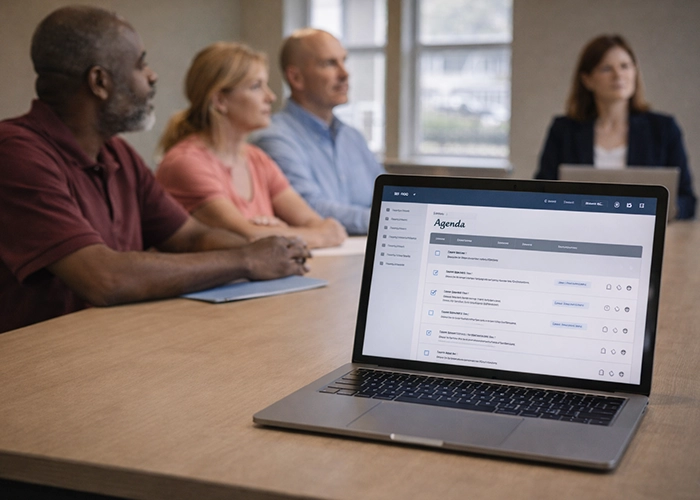
Preparation sets the tone for any successful meeting. With a meeting management feature, agendas can be created and shared well in advance. Board members arrive informed, which leads to focused discussions rather than confusion.

Supporting documents are stored alongside the agenda, so there is no need to dig through inboxes. Time is used more efficiently, and meetings feel purposeful instead of rushed. Over time, this consistency builds better habits across the board.

Creating Clear and Consistent Agendas

Board meeting tools

Clear agendas help meetings stay on track. A meeting management feature allows managers to reuse templates, ensuring nothing important is missed. Financial reviews, old business, and new items all have a predictable place.

This structure reduces side conversations and keeps meetings aligned with their goals. Residents who attend or review meeting records can also follow along more easily. Transparency improves when information is presented in a clear and familiar format.

Simplifying Communication Before and After Meetings

Communication often breaks down around meetings. Notices go out late, documents are missing, or follow-up actions are unclear. A meeting management feature helps prevent those issues by centralizing communication.

Automatic notifications remind board members of upcoming meetings and deadlines. After the meeting, decisions and tasks can be shared quickly. Everyone stays on the same page without extra emails or phone calls.

Improving Accuracy and Accountability With Digital Minutes

Meeting minutes software

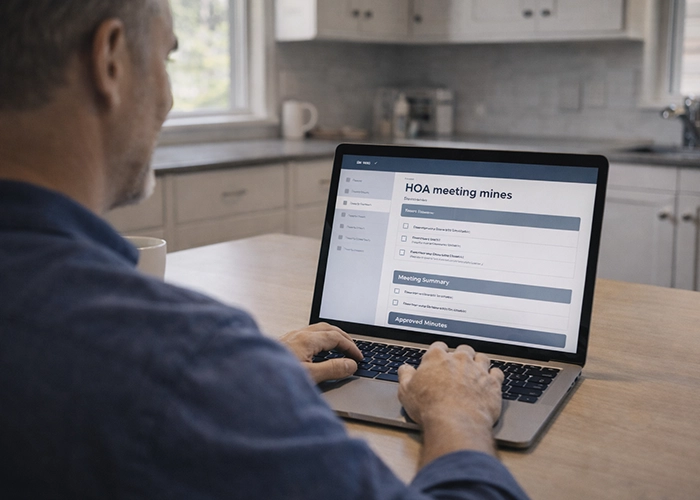
Meeting minutes are official records, and accuracy matters. A meeting management feature supports real-time note-taking and standardized formats. Important motions, votes, and approvals are easier to capture correctly.

Once approved, minutes are stored securely and can be accessed later without searching through files. Accountability improves because decisions are clearly documented. This protects both the board and the association over time.

Supporting Better Decision-Making During Meetings

Meetings run better when information is accessible. A meeting management feature allows board members to review reports, contracts, and proposals during the meeting itself. Decisions are based on facts rather than memory.

Voting tools, when included, help record outcomes quickly and clearly. This reduces confusion and speeds up the process. Meetings feel more productive, which respects everyone’s time.

Enhancing Transparency for Homeowners

Board meeting tools

Homeowners want to know what is happening in their community. A meeting management feature helps boards share agendas, summaries, and approved minutes in a consistent way. This openness builds trust.

When residents can see how decisions are made, concerns tend to decrease. Clear communication reduces misunderstandings and rumors. Over time, transparency strengthens the relationship between the board and the community.

Supporting Compliance and Governance Requirements

HOAs must follow state laws and governing documents related to meetings. A meeting management feature helps ensure notices, records, and procedures are handled properly. Consistency reduces risk.

Digital records also make audits and reviews easier. When documentation is organized, compliance becomes less stressful. Boards can focus on leadership rather than paperwork.

Reducing Administrative Burden for Managers

Meeting minutes software

Property managers juggle many responsibilities. A meeting management feature reduces manual work by streamlining repetitive tasks. Scheduling, reminders, and documentation take less time.

This efficiency allows managers to focus on service and strategy. Burnout is reduced, and overall performance improves. Technology becomes a support system rather than another task.

Adapting to Virtual and Hybrid Meetings

Many HOAs now use virtual or hybrid meetings. A meeting management feature supports this shift by keeping everything organized regardless of format. Documents, attendance, and voting remain consistent.

This flexibility makes participation easier for board members and homeowners. Meetings become more accessible without losing structure. The association stays modern while maintaining order.

Choosing the Right Meeting Management Feature for Your HOA

Board meeting tools

Not all platforms are the same. A strong meeting management feature should be easy to use, reliable, and designed with HOA needs in mind. Training and support also matter.

Boards should look for tools that fit their size and complexity. The right solution feels intuitive rather than overwhelming. Adoption is smoother when the system works with existing processes.

Turning Meetings Into a Stronger HOA

A meeting management feature is more than a convenience. It is a practical tool that improves organization, communication, and trust within an HOA. For communities looking to operate more smoothly, it has become an essential part of modern management.

Running HOA meetings shouldn’t feel overwhelming. Freedom Community Management supports Florida communities with organized, professional HOA management. Call 904-490-8191 or contact us online to get started.

Related Articles:

Using Tech in HOA: Benefits for Your Community

HOA tasks often land in the gaps between work, family, and a volunteer schedule. The right tech in HOA can shrink those gaps by keeping info easy to find and easy to share. Less chasing usually means a calmer week for the board and for residents.

Why Tech in HOA Feels Worth It

Board turnover happens, yet the community still needs bills paid and vendors approved. A basic system keeps files, notes, and key dates in one place. The next person is not stuck digging through old emails.

Everyday wins are where the value shows up. A notice stays posted, and a resident finds the pool rules without sending three messages during a busy week. Over time, tech in HOA feels less like a project and more like a routine.

Clear steps shape expectations. A clear path comes from technology in HOA work, with documents stored in one spot and requests sent through a set form. Response times can be posted up front, so fewer follow-ups land in someone’s inbox.

A Portal That Cuts the Back-and-Forth

technology in HOA

A shared online hub can fix the “where is that form” problem fast. Meeting packets, rules, and common forms belong in one spot. The newest version should be easy to spot.

Communication improves when updates follow a pattern. A news feed, a calendar, and simple alerts can keep residents in the loop. For many boards, tech in HOA communication works best when messages stay short and the next step is obvious.

Access needs to be part of the plan, especially for residents who avoid apps. Mobile-friendly pages, plain wording, and clear labels help more households take part. A tool that feels hard to use will create more work than it saves.

Payments and Records That Stay Clean

HOA technology

Dues can become tense when the process feels unclear. Online payments, auto-pay, and instant receipts can make assessments feel normal. Fewer late fees often follow, along with fewer awkward calls.

Record keeping gets easier when reports live in the same system. Bank files, budgets, reserve items, and vendor invoices can be stored with clear names and dates, with older versions saved in a folder. Board members can then review what they need without hunting in long threads.

Strong records support good choices. Approvals, changes, and notes stay easy to trace if a dispute comes up. In many communities, tech in HOA finance is less about fancy tools and more about clean proof.

Maintenance Requests That do not get Lost

technology in HOA

Common area repairs move quickly. A simple request form keeps details in one place, along with photos, unit numbers, and dates. A clear queue also helps a manager see what is open and what is done.

Vendor work stays smoother with shared files. Bids, insurance papers, and schedules can sit beside the work order, so the scope stays clear. Updates can then be shared with the board in plain language.

Trends show up faster when everything is logged. Repeat gate issues, roof leaks in one building, or rising landscape costs become easier to spot. That clear view can make tech in HOA useful for planning, not just fixing.

Rules and Requests Made Clear

HOA technology

Architectural requests and rule questions can take up more time than most boards expect. Online forms guide owners to share the right details, like paint colors, dates, and photos. A clear workflow also keeps the review fair.

Status updates reduce the “did you get my message” loop. A resident can see that a request was received and reviewed. That simple track record can cut tension during busy seasons.

Violation tracking benefits from the same approach. A short log with dates, notes, and photos keeps the process consistent if a hearing is needed. Tech in HOA does not replace judgment, yet it can keep the record clear and the tone respectful.

Meetings That Reach More Neighbors

technology in HOA

Meetings go better when paperwork arrives early. Digital packets, agenda reminders, and a simple place for minutes can raise turnout and cut down on side conversations. Remote options can also help residents who travel or work late.

Online voting and quick polls can help in some places, yet local rules still matter. State laws and governing documents should be checked before any voting change. Some notices may need owner consent.

Follow-through matters after the meeting ends. Action items can be assigned and tracked, with deadlines easy to see. In that rhythm, tech in HOA board work supports accountability without extra stress.

Smarter Safety for Data and Money

Each new tool adds a new door, so basic security should stay front and center. Two-step sign-in, strong passwords, and limited admin access can block many common attacks. Backups and clear account ownership also protect the HOA when a volunteer steps down.

Vendor security questions should feel normal. Data storage, support access, and breach plans belong in the talk before a contract is signed. A short written note helps the board remember what was promised.

Good habits keep mistakes small. HOA technology should not mean shared logins, and each person needs their own account. Access should match the role, with private files limited to the right people.

Picking Tools Without Regret

A good tool fits the community, not the other way around. Size, budget, and comfort level should guide the choice. Staff time and pain points matter too.

Training works best when it stays simple. A one-page guide can cover most needs, and a brief demo at a meeting helps too. A clear help email address keeps questions in one place.

A few checks can protect the budget and the board’s time.

  • Support speed: What happens when a login fails on a weekend?
  • Role control: Can access be limited by job, without extra fees?
  • Exports: Can records be downloaded in a common file type?
  • Costs: Do add-ons raise the price in year two?

A Smooth Rollout

Most boards see pushback when a new login shows up. A soft launch keeps stress down. One feature, like online payments, can go first.

Short guides help people feel confident. Paper options can stay for a while, so no one feels left out. A few minutes of live help at a meeting can clear up the common issues.

Tech That Sticks

Real progress does not require the newest platform. A steady rollout and clear steps can make tech in HOA feel natural instead of stressful. More time can then go toward the community itself, not the paperwork.

Related Articles:

Would HOA Apps Be Helpful To Your Community Or Just An Added Expense?

Some HOA board members swear by them. Others aren’t so sure whether HOA apps are a smart investment or just another tech tool that collects dust after a few months.

The Promise of HOA Apps

At their best, HOA apps promise smoother communication, fewer missed dues, and more engaged communities. They can act like a central nervous system for your HOA—tracking maintenance requests, pushing out emergency alerts, and letting residents pay assessments from their phones in less time than it takes to microwave popcorn.

They’re not just digital gimmicks. Many HOA management apps combine tools that used to require three different platforms and a part-time manager juggling spreadsheets. From architectural review requests to document storage to real-time voting, apps like TownSq, AppFolio, or Buildium have become cornerstones for tech-savvy communities.

Communication: Where It All Starts

If you’ve ever tried to get 87 homeowners to read a bulletin board notice, you know that communication is the hill most board members silently die on. HOA communication apps promise to fix this.

They centralize updates, allow instant push notifications, and give residents a space to ask questions or raise concerns without needing to corner you in the clubhouse parking lot. Some apps even let you control who sees what—perfect for separating resident news from vendor chats or board discussions.

But there’s a caveat: if residents don’t download the HOA mobile app or engage with it, it becomes another silent tool. It’s well-intentioned, but underused.

So, before signing any contract, boards should ask: Do our homeowners prefer digital tools? Are they likely to use an app over email or a physical notice? If your community skews older or less tech-inclined, a mobile app may end up like the treadmill in your guest room: nice in theory, mostly gathering dust.

Transparency Without the Headache

One underrated perk of HOA management software? It helps with trust. With all the talk around assessments, budgets, and enforcement actions, transparency can either be your ally or your biggest pain point.

Apps like Condo Control or CINC Systems allow homeowners to access governing documents, meeting minutes, or budget breakdowns anytime they want—no need to email the board or chase down a manager. That kind of access helps curb suspicion, reduces repeated questions, and builds a sense of accountability.

You’d be surprised how much frustration fades when people can find answers themselves. But here’s the kicker: those documents still need to be uploaded and maintained. If no one on the board—or your management team—is regularly updating the platform, it quickly becomes outdated, and your homeowners will stop trusting it.

Maintenance Requests: No More Sticky Notes

lady using stickly notes | hoa apps

In older communities or those run by more traditional boards, work orders can get lost. Residents slip notes under clubhouse doors, call the board president directly, or scribble on clipboards in the gym. No judgment—we’ve all been there.

Community management apps take that chaos and put it in one place. A resident reports a broken gate? It’s logged, timestamped, assigned, and tracked. No more miscommunication, and no more pretending you didn’t get the message.

Many HOA apps even let you upload before-and-after photos or comment on job progress. It’s like turning your community’s repairs into an efficient mini helpdesk—and it keeps vendors accountable, too.

Are the Costs Justified?

Most HOA apps are priced per unit or tiered based on the features they offer. A small community might pay $50–$150/month; larger ones can pay thousands annually, depending on complexity. That cost can feel steep, especially if assessments are tight or residents are wary of fee hikes.

But here’s a way to reframe it: how much are you spending on manual processes, printing notices, or managing complaints that spiral because of missed communication? Often, the app’s cost is lower than the cumulative drain on your board’s time. However, time is a resource many HOAs undervalue until it’s gone.

Still, cost-benefit only works if the board (and the residents) commit to using the platform. That means onboarding, regular updates, and encouraging homeowners to engage. Without adoption, even the most powerful tool can fall flat.

Not One-Size-Fits-All

This is where nuance comes in. Not every HOA needs a full-featured HOA management app loaded with financial tools, architectural reviews, and live chat options. Some communities thrive with simpler platforms like HOA Express or Google Workspace, plus a mass texting service. Others, especially those with hundreds of homes or amenities like tennis courts, elevators, or security gates, might need something more robust.

There’s no shame in starting small and scaling up. It’s smarter than overcommitting to a system that overwhelms your board and confuses your community.

What About Security?

phone security | hoa apps

With apps storing sensitive data, such as resident addresses, banking information, and possibly even gate codes, security is a legitimate concern.

Reputable HOA management apps typically encrypt data, offer secure logins, and comply with housing and data privacy laws. Still, boards should ask detailed questions during onboarding: Where is the data stored? Who has access? What happens if we leave the service? A little paranoia isn’t a bad thing when you’re protecting community trust.

The Human Element

Here’s where most articles skip ahead. Fancy tools don’t make apathetic communities more involved. No matter how sleek the platform, HOA apps won’t magically fix fractured trust or disengagement.

They help, streamline, and offer structure. However, relationships between the board, residents, and management continue to drive everything.

Before you buy anything, ask yourself: What are we hoping this app will solve? If the answer is poor communication, slow maintenance response, or document accessibility, then an app could be the step forward your board needs. However, if the problem is deeper—such as a lack of cohesion, broken trust, or absentee leadership—no app can cover that up.

Modern Solutions for Modern Communities

HOA apps can absolutely help communities run more efficiently, save time, and reduce headaches, but only if they’re well-suited to your needs and widely adopted by the people who use them. Technology should serve the community, not confuse it or quietly bleed the budget.

Looking to handle your HOA operations more efficiently with apps? Freedom Community Management provides HOA management services in Florida. Call us at 904-490-8191 or contact us online to learn more!

Related Articles:

HOA Owner Portal: A Necessity In The Digital Age

The HOA owner portal is one of the most convenient tools for homeowners, board members, and management companies. It serves as a central hub for accessing information and a means of processing transactions easily. However convenient it might be, is it really necessary?

What is an HOA Owner Portal?

An owner portal in HOA communities is a secure online space where HOA managers, board members, and homeowners can log in with an individual account. They can access important documents, announcements, and meeting reminders through the portal. 

In addition, many HOA portals facilitate quick and easy interaction between homeowners and management. Residents can often reserve amenities, report violations, and create maintenance requests with a button. 

In some instances, an HOA owner portal can even serve as an online hub where homeowners can interact and discuss community issues. This is especially useful for large communities where homeowners cannot always meet physically. 

HOA Portal vs HOA Website

An online portal for homeowners is distinct from HOA websites in several ways. Firstly, HOA websites are public and serve to connect outsiders to the HOA. Potential buyers can read about the community through the website, which can be a way to attract new homeowners. 

Meanwhile, an HOA owner portal allows homeowners and managers to access more sensitive information. Members-only information may include newsletters, HOA governing documents, and forms. Often, HOA portals are only accessible via password.

It can get confusing as the homeowner portal often exists within the HOA website. Homeowners might think they’re accessing the portal when, in reality, they’re just using the public webpage!

10 Reasons Why HOA Owner Portals Are Necessary

A homeowner portal on HOA websites is necessary for several reasons. Here are the top reasons why you should consider having one. 

1. Easy Communication

conversation | hoa owner portal

HOA owner portals offer a secure way for community members to communicate with each other. Homeowners, board members, staff, and HOA managers can all connect through online forums. In addition, it’s an easy way to disseminate important information. Board members can send notices of upcoming meetings, past setting minutes, and other announcements.

Plus, when members can better engage with each other online, it fosters a stronger sense of community. They can collaborate on projects, create polls, discuss issues, and make suggestions for community improvements all in one place.

2. Amenity Reservation

It can take a lot of work to manage a community with several amenities. An HOA owner portal makes it easy by providing an online reservation system. This way, homeowners won’t need to argue over who gains access to the gym and who doesn’t. They can reserve their slot online and adjust their schedules accordingly.

Online reservations make foot traffic control much more accessible. With it, HOAs can prevent venues like gyms and pools from overcrowding. They also no longer need to station staff on-site just to manage the venue’s maximum capacity. 

3. Online Payment and Account Management

An online portal makes it easy for homeowners to update their account information and make online payments. They can access their unpaid due balances, view fines, and review their payment history. More sophisticated portals even allow them to set up automatic payments.

4. Maintenance Requests

The HOA board only sometimes has the luxury of time. They cannot inspect every nook and cranny of the neighborhood to look for damages or potential problems. For this reason, they often enlist the help of homeowners to report any maintenance issues they spot.

An HOA owner portal makes this process much quicker. Residents can take photos and submit work orders all through the website. Moreover, they can even track the progress of these requests to keep the board accountable. 

5. Access to Essential Information

An HOA portal lets homeowners access all the essential information related to the community. These may include updated governing documents, meeting schedules, insurance information, and newsletters. 

6. Efficient and Affordable

Online portals act as a central hub for all things HOA. Since residents can pay bills, access information, and interact in one place, the HOA can go paperless and save money on printing. Online portals are also quicker because they eliminate the manual processes of submitting physical forms, reading through them, and going through approval. 

7. Security

Documents, homeowner information, and community data are all secure within the HOA portal. Only members with an account can access the portal so that no outsider can steal your data. Sometimes, HOA portals even provide two-factor authentication to confirm the person’s identity before they can log in. 

8. Enhanced Transparency

HOAs can enhance transparency with homeowner portals. Budget summaries, project updates, and expense reports are usually accessible. Homeowners can quickly review the HOA’s spending and feel at ease knowing how their money is spent. They can keep the board accountable and raise questions if there’s any suspicious activity.

9. Feedback Collection and Management

checking reviews | hoa owner portal

It’s not uncommon for residents to complain about the HOA and board. The HOA owner portal allows them to provide feedback directly to the board without attending a meeting, share ideas, or offer suggestions.

The board’s online portal allows them to collect all the feedback and give it careful thought. Because it’s online, board members can also compile and group similar feedback, allowing them to address complaints and issues more efficiently.

Furthermore, online portals allow the board to address comments promptly. They can explain the reason behind specific actions or apologize for mistakes. Doing so will make homeowners feel heard and appreciated.

10. Event Management

HOAs often host Christmas parties and Easter festivals to increase community engagement. However, event management can be stressful, especially without the proper tools.

An owner portal can help by allowing committees to create and publish events online. Residents can quickly see the details of an upcoming event to stay informed. This eliminates the need to post flyers or send physical announcements in the mail. 

Get an HOA Owner Portal Today

An HOA owner portal is necessary in today’s modern world. It brings several advantages to communities as boards no longer need to communicate with them by sending letters in the mail. It’s an easy way to disseminate information and manage various activities like payments, events, and maintenance requests.

Do you need access to an HOA portal? An HOA management company like Freedom Community Management can help. Call us now at 904-490-8191 or contact us online to learn more!

Using Modern Technology In HOA Management

Homeowners associations should take advantage of technology in HOA management. Technology can alleviate the burden of managing communities through automation and smart processing. It is an invaluable tool that can support functionality and efficiency.

Understanding the Role of Technology in HOA Management

Homeowners associations have been around for decades, dating back all the way to the 1800s in the United States. It wasn’t until the 1960s and 1970s, though, that these communities truly began to boom. Since then, HOAs have grown in number with each passing year. Today, estimates show that there are almost 370,000 HOAs across the country.

Throughout the years, as more HOAs sprouted, technology advanced with it. Whereas associations relied mostly on manual processes and traditional methods in the past, associations have since transitioned to incorporating technology into their operations. 

There is no denying that technology offers plenty of benefits, chief among them being the streamlining of processes through automation. For example, with HOA software, HOAs can go through an entire billing process with just a few clicks.

It also allows for convenience for everyone involved. Board members can track requests and send notices without doing much, while homeowners can view their accounts and settle payments remotely. Using technology in HOA management also promotes transparency and accountability through easy records inspections and financial updates.

Technology plays a critical role in the management of HOA communities. It supports collaboration and fosters a sense of community in residents. With online forums and discussion boards, technology inevitably increases engagement with homeowners and promotes a harmonious community.

How to Take Advantage of Modern Technology in HOA Management

In today’s digital landscape, HOAs can significantly benefit from integrating modern technology into their management practices. By leveraging innovative tools and systems, HOAs can enhance efficiency, improve communication, and streamline operations. 

Here are the tools and systems that make up modern HOA management.

1. Online Payment Systems

woman linking credit card | technology in hoa management

Online payment systems simplify the collection of dues and fees, offering homeowners a convenient way to pay. These systems support multiple payment methods, including credit cards, direct bank transfers, and electronic checks. 

The automation of recurring payments reduces manual administrative tasks and ensures timely transactions. This benefits both the HOA and the homeowners.

2. Financial Management Tools

Financial management tools are crucial for maintaining accurate and transparent financial records. These tools assist with budgeting, accounting, and generating financial reports. They enable HOAs to track expenses, manage reserves, and produce detailed financial statements, ensuring robust financial oversight and planning.

3. HOA Websites and Owner Portals

HOA websites and owner portals are centralized hubs for information dissemination and communication. These platforms give homeowners easy access to important documents, announcements, meeting minutes, and contact information. Additionally, they can access their accounts, settle balances, and submit complaints or work orders. These portals also allow for direct communication between residents and the HOA.

4. Task Management Tools

Task management tools help HOA boards and teams organize and prioritize duties. These tools enable the assignment and tracking of tasks, ensuring the efficient completion of projects and meeting deadlines. By improving task coordination, HOAs can enhance productivity and accountability.

5. Architectural Review Software

Architectural review software streamlines managing and approving homeowner requests for property modifications. This software allows homeowners to submit requests digitally while the board can review and approve them online. It ensures that all changes comply with the community’s guidelines, maintaining the aesthetic and structural integrity of the neighborhood.

6. Facility Reservation Tools

Facility reservation tools simplify the booking of community amenities such as clubhouses, pools, and tennis courts. Homeowners can view availability and make reservations online, reducing the administrative burden on HOA staff and ensuring fair and organized use of shared facilities.

7. Online Voting Systems

Online voting systems enhance the democratic process within the HOA by making it easier for homeowners to participate in elections and referendums. These systems ensure secure, transparent, and efficient voting, encouraging greater homeowner involvement and facilitating quicker decision-making.

8. Data Analytics

analyzing graphs | technology in hoa management

Data analytics tools enable HOAs to gain insights from the vast amounts of data they collect. These tools can analyze trends, monitor community satisfaction, and identify areas for improvement. By leveraging data, HOAs can make informed decisions that better serve their communities.

9. Cloud-Based Management

Cloud-based management platforms provide HOAs with a centralized, accessible, and secure way to manage their operations. These platforms offer features such as document storage, communication tools, and task management, all accessible from any device with an internet connection. Cloud-based solutions enhance collaboration and ensure that vital information is always available.

What to Look for in HOA Software

Selecting the right HOA software is crucial for maximizing the benefits of technology. Here are vital factors to consider when choosing HOA management software.

Necessary Features

First, board members should identify the specific needs of their HOA. This ensures that the software they choose offers the necessary features. This could include online payments, task management, communication tools, and financial management capabilities. Tailoring the software to an HOA’s requirements will ensure it effectively addresses the association’s unique challenges.

Data Security

Data security is paramount when handling sensitive homeowner information. Look for software that employs robust security measures, such as encryption, secure login protocols, and regular security updates. Protecting personal and financial data builds trust with homeowners and safeguards against cyber threats.

Data Privacy

Data privacy is essential for maintaining homeowner confidence. Boards should choose software with strict access controls, allowing only authorized personnel to view and manage sensitive information. Implementing role-based access and audit trails helps maintain accountability and compliance with privacy regulations.

Hiring an HOA Management Company

While technology can significantly enhance HOA management, hiring a professional HOA management company can further streamline operations and bring additional expertise to the table. A management company can provide comprehensive services, including financial management, maintenance coordination, and homeowner communication.

Furthermore, most management companies already leverage modern technology in their operations. They use the latest software and management tools to automate processes, reduce inefficiencies, promote transparency, and offer convenience.

Integrate Technology in HOA Management

Technology plays an essential role in today’s management landscape. This is true for businesses and homeowners associations. While HOAs can purchase or subscribe to self-managed software, hiring an HOA management company that already utilizes technology to its advantage is infinitely more beneficial.

This is where Freedom Community Management comes in. Call us today at 904-490-8191 or contact us online to learn more about what we can do for you!