
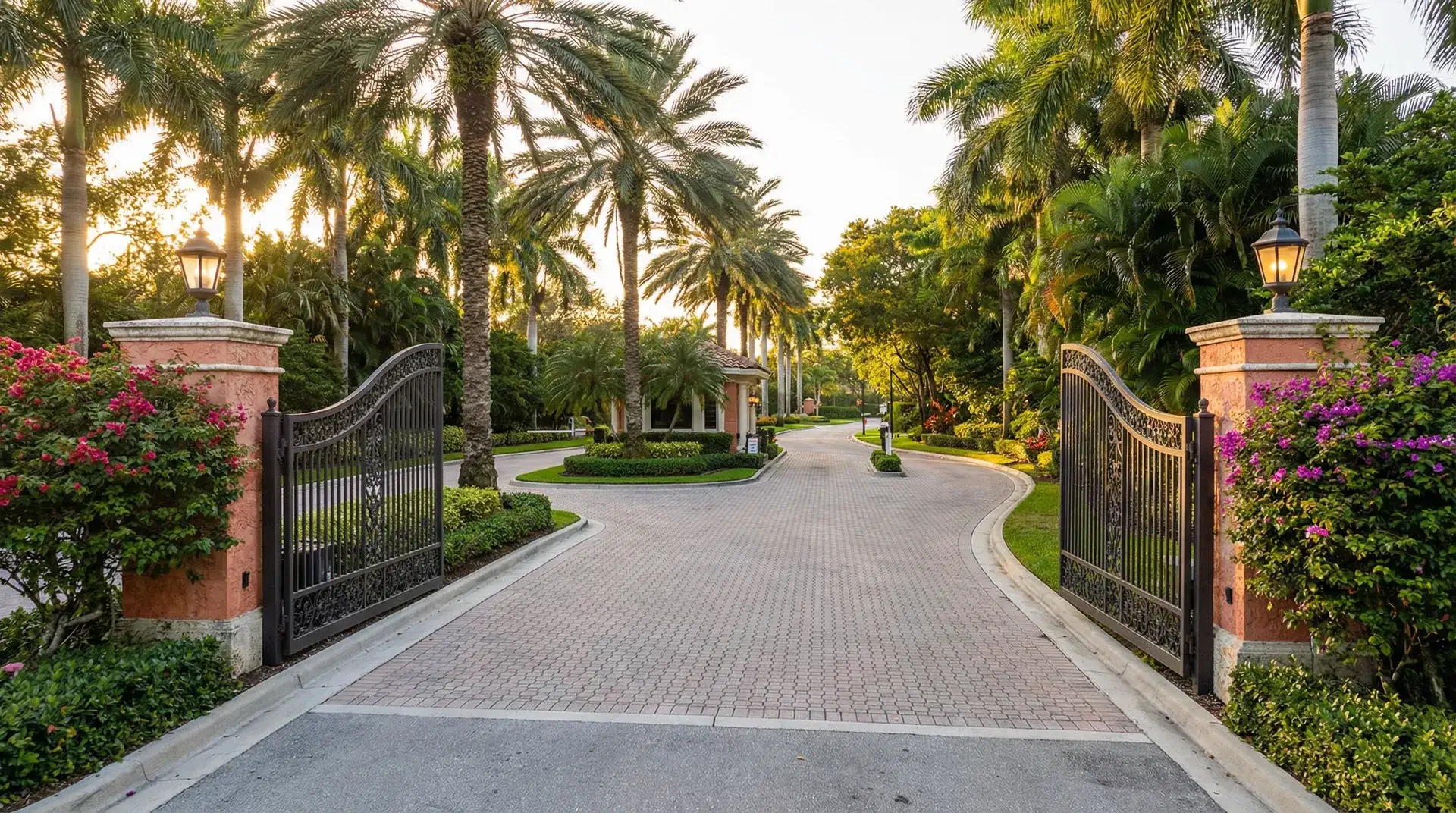
HOA Management in Fleming Island
HOA management built for Fleming Island's master + sub-association structures and high-end amenity packages.
Serving Fleming Island, Clay County
Three names cover most of the Fleming Island HOA market, Eagle Harbor, Fleming Island Plantation, and Pace Island, and each one is structured differently. Eagle Harbor alone runs as six separate sub-HOAs across more than 3,200 homes plus the Eagle Harbor Golf Club and a CDD layer. Plantation has its own CDD-funded amenities. Pace Island operates as a single gated community with a different cultural orientation. Then there are the smaller established communities like Wedgefield,78 homes on a lake, no CDD, no sub-association web, just an older HOA holding the line on community standards that have been in place for decades. This page covers how we work across that range, including our day-to-day at Wedgefield.
Service area
Around 25 minutes south of our Jacksonville office via I-295 to US-17, roughly 20 miles.
Neighborhoods & communities we know in Fleming Island
ZIP codes served
Inside our work · Wedgefield
Preserving community standards in a 78-home established Fleming Island HOA
Homes
78
Structure
Established HOA
Profile
Lake, longtime owners
Wedgefield is exactly what most of Fleming Island's largest communities used to be: a 78-home HOA with mature landscaping, a lake, and a homeowner base where many residents have been in place for 15 or 20 years. Communities like this don't have the governance complexity of an Eagle Harbor or a Fleming Island Plantation, there's no CDD overlay, no sub-association network, no master amenity package. What Wedgefield does have is a set of community standards that have defined the neighborhood for decades, and the governing documents that back them up. Our job at a community like this is preservation, not transformation.
The MRTA 30-year clock is the single biggest preservation risk at older HOAs. Florida's Marketable Record Title Act (Chapter 712) extinguishes covenants and restrictions every 30 years unless the association files a preservation notice in the public records. Section 720.303(2)(e) requires boards to discuss MRTA compliance at the first meeting after every annual members' meeting, many older Fleming Island boards aren't aware that's a statutory duty. If the deadline passes without a preservation filing, the entire declaration can become unenforceable. Fixing it then requires revitalization, a majority vote of all owners, not just those present, which is a significantly harder bar than the board action that would have prevented the lapse in the first place.
We track the preservation date for every association we manage, place MRTA on the board's standing agenda per the statute, and coordinate with counsel well before the 30-year deadline so the preservation instrument (or a Section 720.3032 statement of marketable title action) is recorded with Clay County in time. For Wedgefield specifically, that means knowing the exact recording date of the original declaration and any prior preservation filings, an audit step we run during onboarding, not a calendar reminder we set up later.
Document modernization is the second preservation lever. Even when a declaration is properly preserved, portions of older governing documents intersect uncomfortably with current Florida law, enforcement provisions that wouldn't hold up in court today, fining schedules that predate the current 720.305 structure, suspension procedures that miss a statutory notice requirement. We identify the specific provisions that have aged badly, flag them for the board, and coordinate with HOA counsel on the highest-risk amendments rather than a wholesale rewrite.
Consistent enforcement of community standards is what actually protects property values at a community like Wedgefield. When a board has let the same violation slide for three different owners over five years and then enforces against a fourth, that's not enforcement, it's selective enforcement, and it gets overturned. We maintain a violation log from day one of the engagement so decisions going forward are applied uniformly, and we help the board work through the historical inconsistency, typically with a written notice reset that gives everyone a clean start, rather than compounding the problem by half-enforcing the old pattern.
How master + sub-association governance actually works in Fleming Island
A homeowner inside Eagle Harbor pays into three governance bodies: the sub-association for their specific neighborhood, the Eagle Harbor master association, and the CDD that funds and maintains major infrastructure. Each one has its own board, its own budget, its own dues, and its own scope of authority. When a resident calls about a fence, a streetlight, a pool gate, or a landscaping question, the manager has to know in seconds which entity actually owns the asset. We document that asset routing during onboarding so the front desk doesn't guess and so the bills go to the right balance sheet.
Fleming Island Plantation operates with a similar layered structure but a different amenity philosophy, the CDD funds the swim park, walking trails, and major recreation infrastructure, and Plantation residents typically expect responsive amenity programming rather than just maintenance. Pace Island, by contrast, is a single gated community with a stronger privacy and natural-preserve orientation; the management work there leans toward consistent architectural standards enforcement and quieter common-area operations rather than amenity programming.
Capital planning at amenity-rich communities like these requires sequencing rather than reaction. Pool resurfacing on a 25-year cycle, clubhouse roof on a 20-year cycle, asphalt overlay on a 15-year cycle, and tennis surface refresh on a 7-year cycle all interact, running two of them in the same year creates a dues spike, and skipping the early year of a cycle pushes the cost into a special assessment later. We model the full 30-year capital schedule against the reserve study so the board can pick the funding path that smooths the curve rather than the one that defers the pain.
Featured Communities in Fleming Island
Here are some of the Fleming Island communities that trust Freedom. We manage HOAs and condo associations of every size here. See more communities in our portfolio.
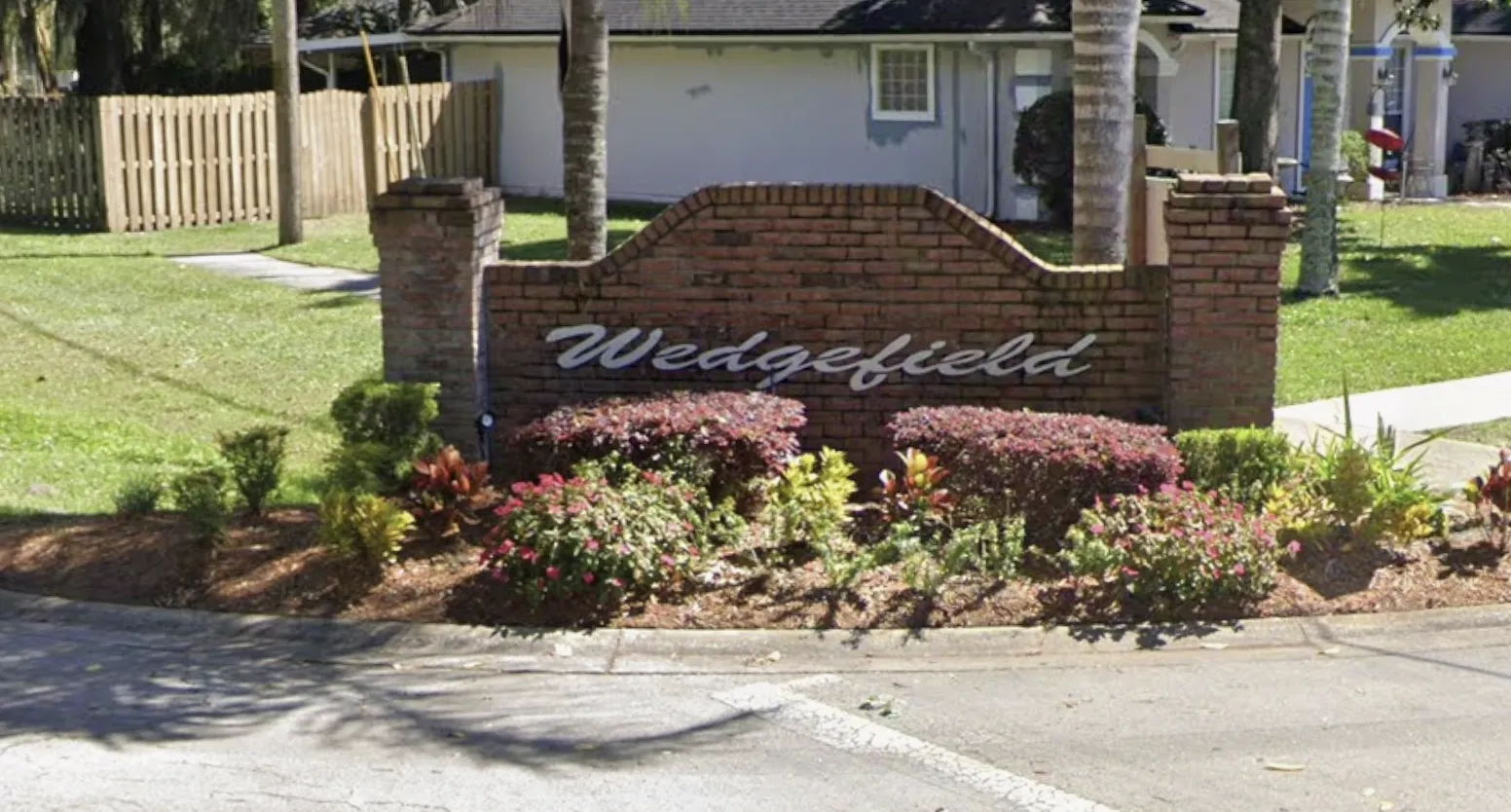
Wedgefield
Questions we hear from Fleming Island boards
Our sub-association is part of a larger master HOA. Can FCM manage just our piece?
How does FCM handle the CDD/HOA distinction when residents have a complaint?
Do you have experience with golf-course-adjacent HOAs?
Our reserves are funded but we want cosmetic upgrades. How does that work?
How quickly can a manager be on-site in Fleming Island?
Ready for a better management partner in Fleming Island?
We'll review your current budget, reserves, and vendor contracts and send back a transparent proposal , no pressure, no hidden fees.
Driving directions to our Jacksonville office
Route shown from Eagle Harbor Golf Club, Fleming Island to our Jacksonville office.
Freedom Community Management
751 Oak St, Suite 110, Jacksonville, FL 32204 · 904-490-8191